
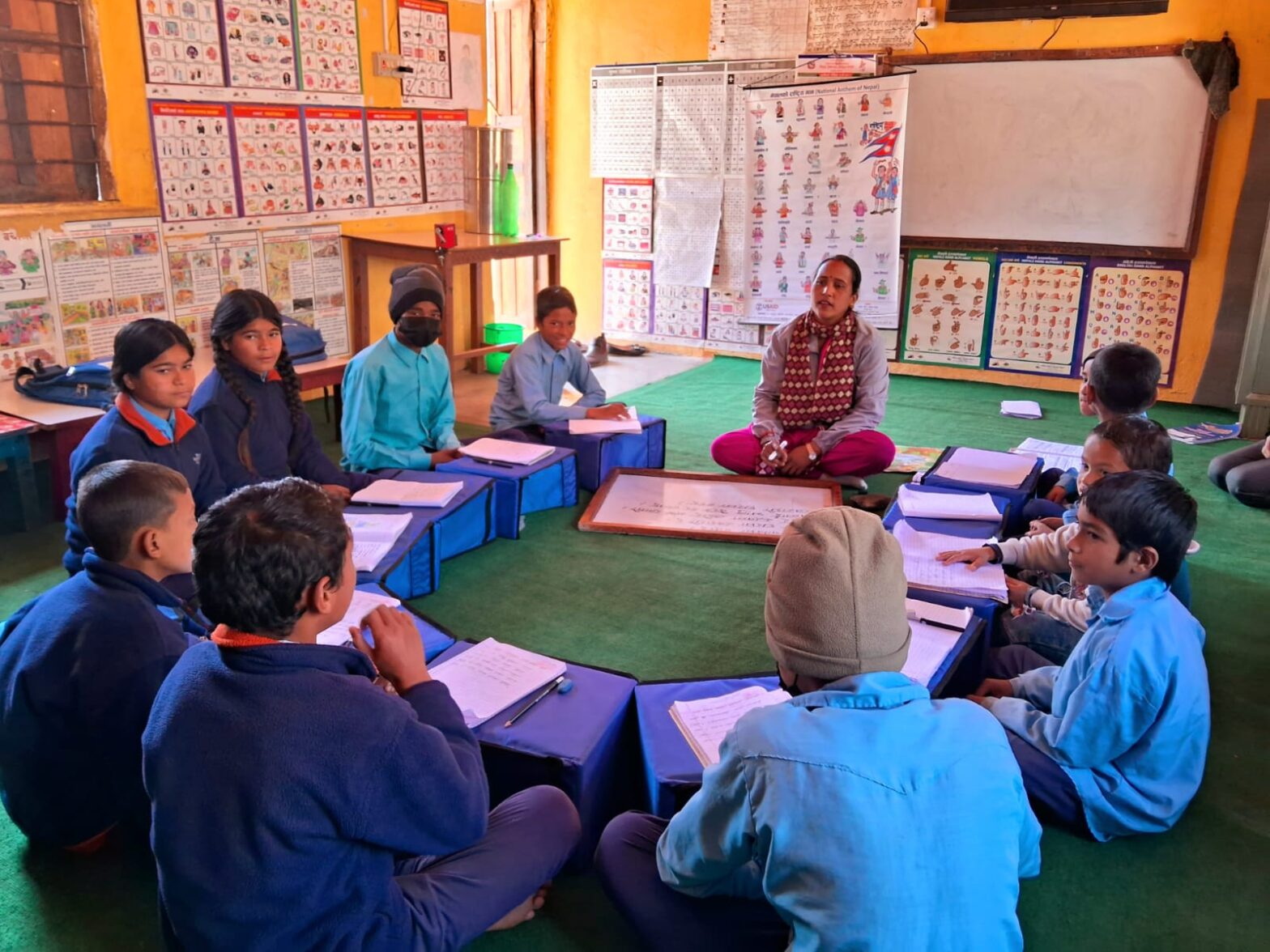
In the remote villages of Nepal’s Far-Western region, educator Srijana K.C.* has devoted the past six years to teaching children with disabilities. Based at Shree Tribhuwan Janta Secondary School in Chhateshwori, Salyan, she currently provides instruction to 12 regularly attending students who have hearing impairments.
Children with disabilities remain among the most marginalized groups in Nepal. Systemic barriers including a profound shortage of trained teachers, limited specialized resources, and inaccessible infrastructure severely hinder their integration into mainstream schools. While policies such as the Incusive Education Policy of 2017, later reaffirmed by the National Education Policy of 2019 affirm education as a fundamental right for every child, implementation has been critically slow.
The data reveals a stark reality. In 2016, UNICEF found that 30.6 percent of children with disabilities or approximately 15,000 to 56,000 children, ages 5 to 12, did not attend school. Dropout rates increase precipitously at higher levels of education, with many students unable to transition beyond primary school due to inadequate support.
Srijana’s classroom is a microcosm of both need and hope. As one of the few specially trained teachers in her region, she employs adapted methodologies and relentless advocacy to create a space for learning. Driven by a singular goal, Srijana is deeply committed to integrating her students into mainstream learning as swiftly and seamlessly as possible, facilitating their transition from resource classes to regular classrooms.
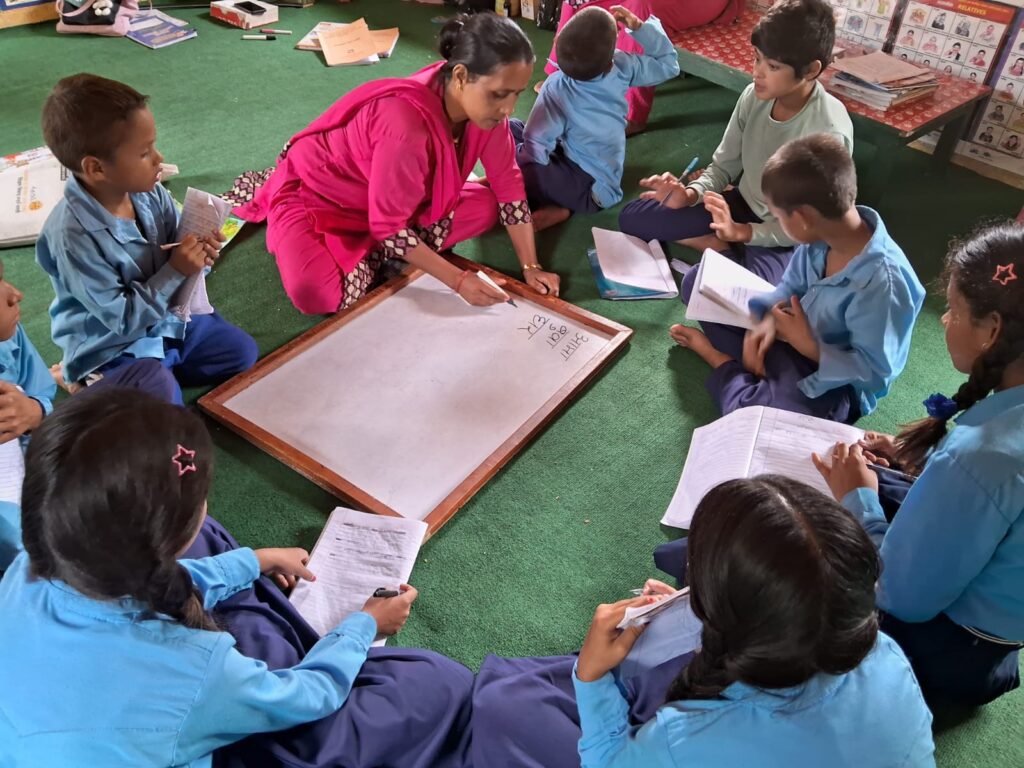
A significant breakthrough came last year when she embraced an intensive 8-day Teaching at the Right Level (TaRL) training. This included specialized modules on TaRL Adaptation for Children with Disabilities and Early Screening. Upon returning to her school, Srijana immediately began applying these innovative methods. The TaRL approach, which groups children by learning level rather than grade, was a revelation. She observed her students, many previously disengaged adapting quickly to the remedial techniques and participating with newfound enthusiasm.
Srijana’s application of the method was systematic. Following a baseline assessment, she organized her students into leveled groups for numeracy: eight in Group 1 (beginner/number level), two in Group 2 (addition/subtraction), and two in Group 3 (multiplication/division). In literacy, all began in the beginner group, focusing on letter and word recognition. This marked a profound shift from her previous reliance on textbooks, which she admits often led to unstructured lessons with inadequate materials. Now, her classroom is dynamic, utilizing 46 distinct adapted activities from the TaRL for Children with Disabilities guide. Through play-based learning tools, letter-identification games, and number-recognition exercises, she delivers targeted, level-specific instruction to strengthen core skills.
The results are compelling. An endline assessment conducted after ten weeks of the adapted TaRL intervention revealed significant progress. Only two students remained in the beginner Group 1 for both subjects, while all others advanced to Groups 2 and 3 in numeracy and literacy. This learner-centric method has demonstrably increased both classroom participation and measurable learning outcomes, proving its effectiveness for inclusive education.
Beyond academics, the initiative builds systemic capacity. The early screening component equips teachers to identify potential disabilities in children aged 2–17, while coordinated medical camps ensure referrals and necessary support services. This holistic framework is being scaled through initiatives like the Sakchham project, which conducts trainings, screenings, and plans further medical camps.
The Build the Basics (BTB) project, in collaboration with the National Federation of the Deaf Nepal (NDFN) and the Nepal Association for the Welfare of the Blind (NAWB), developed the essential TaRL Adaptations Guide for Children with Disabilities. Building on the methodology pioneered by Pratham India, Street Child is strengthening inclusive education by training teachers to implement TaRL for students with hearing and visual impairments and intellectual disabilities.
Despite these advances, Srijana emphasizes that her story is an exception, not the norm. She continues to teach using the TaRL approach, mentoring support, and advocates for the greater attention and sustained investment these children deserve. Her classroom stands as powerful evidence: with the right tools and training, inclusion is not just a policy promise but an achievable reality. The path forward is clear, what works should be scaled.
*Names have been changed for protection purposes.